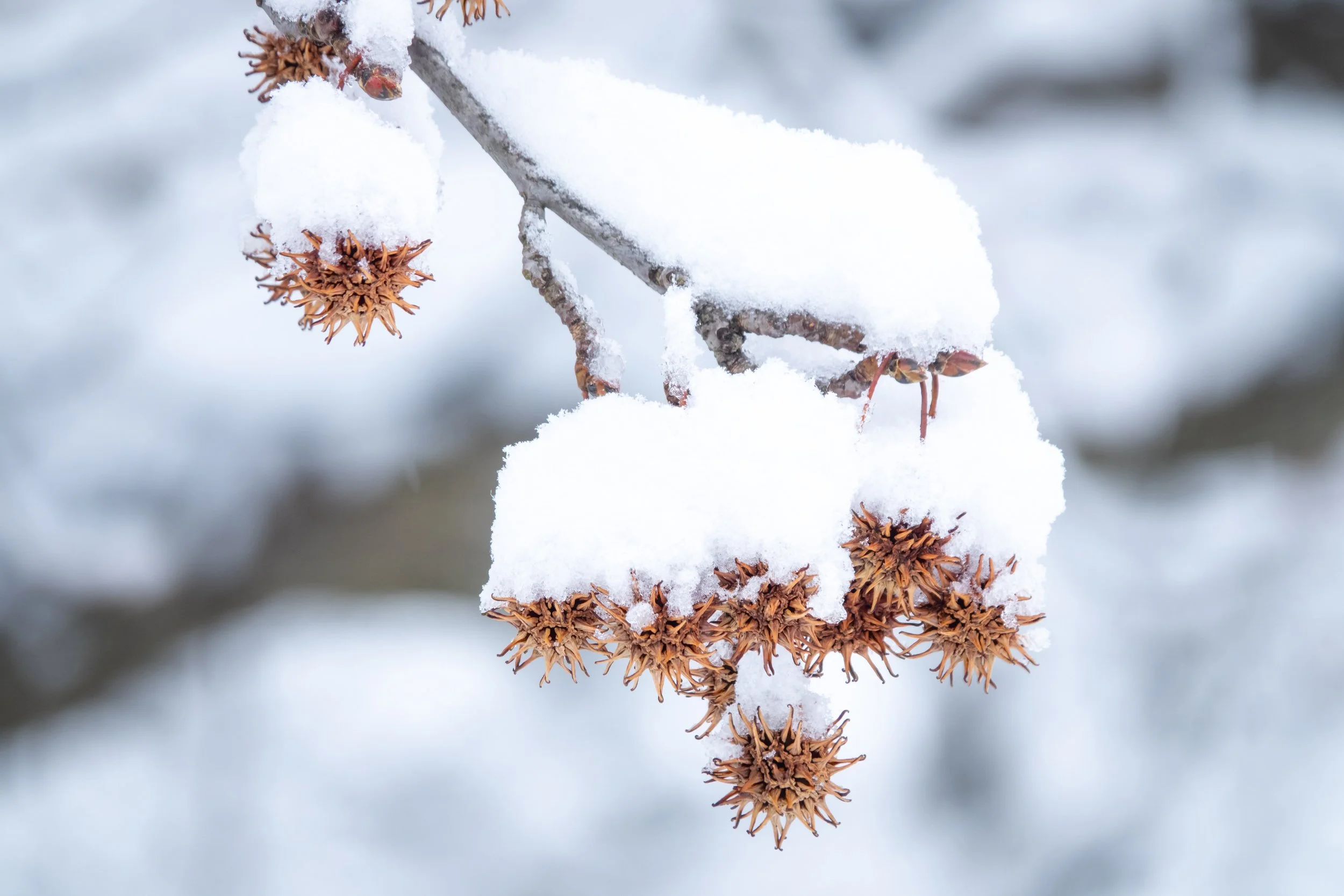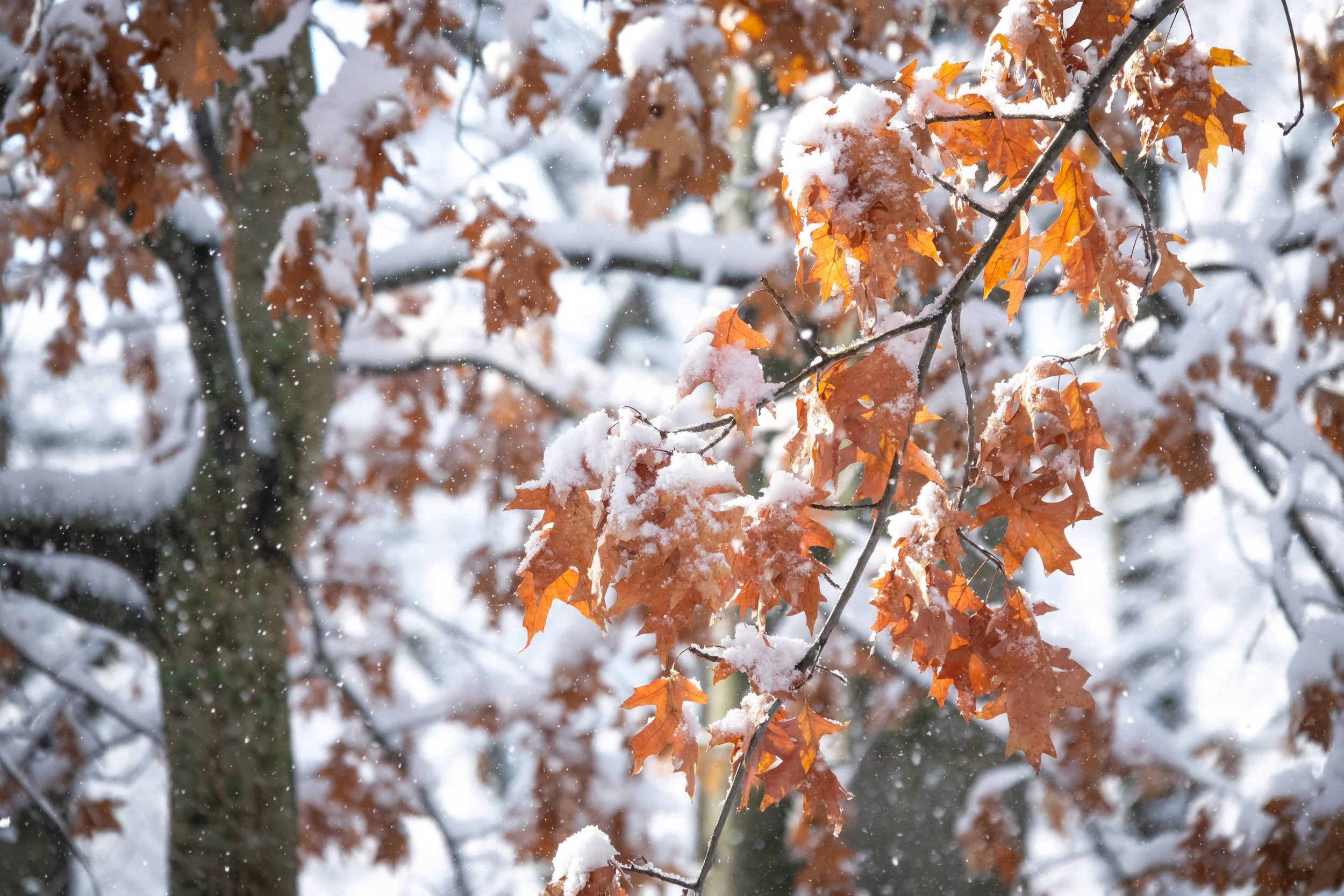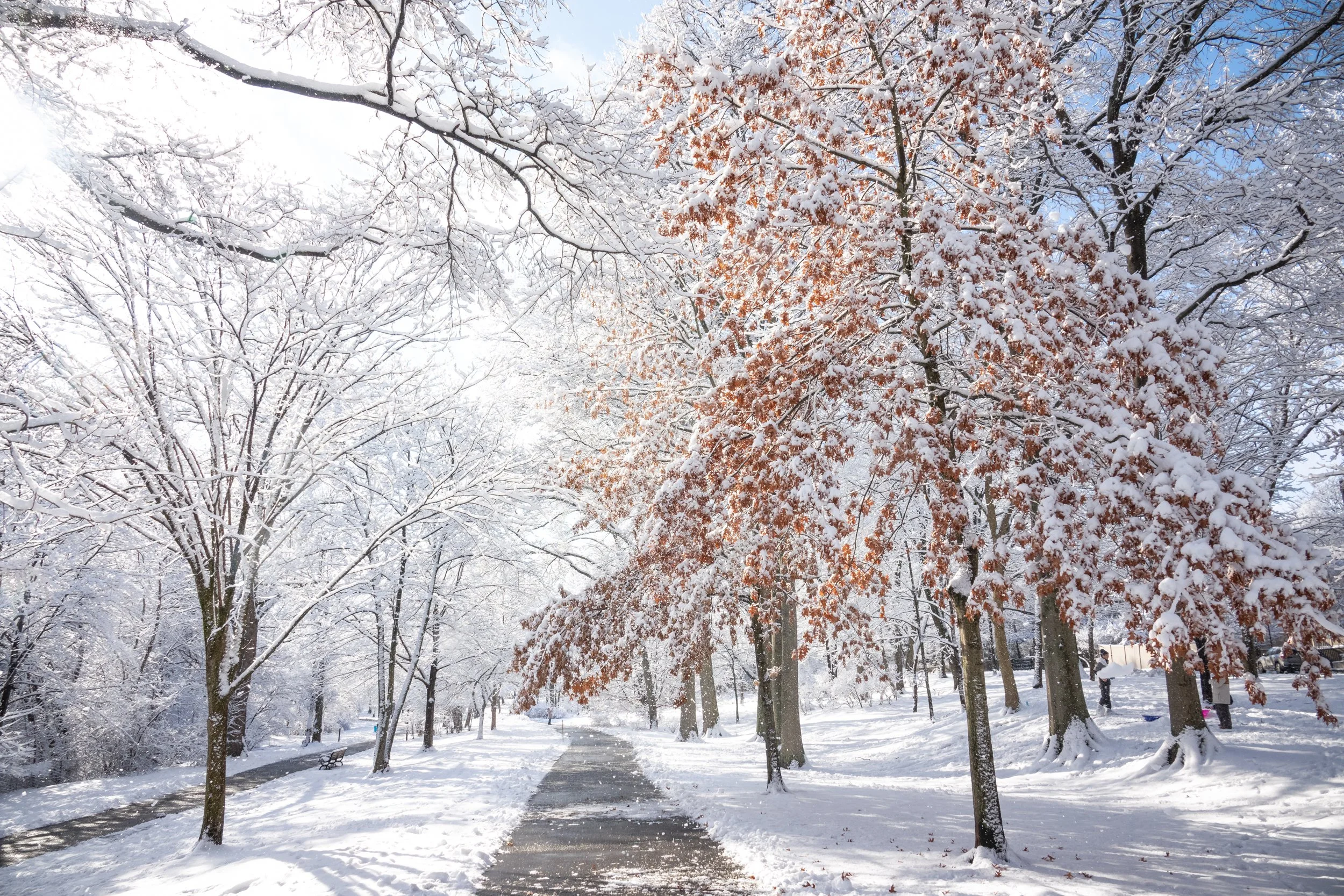
Marcescence (n., of a plant part): The quality of withering but remaining attached in the winter; a biological trait believed to be adaptive or protective in certain deciduous tree species such as beech or oak
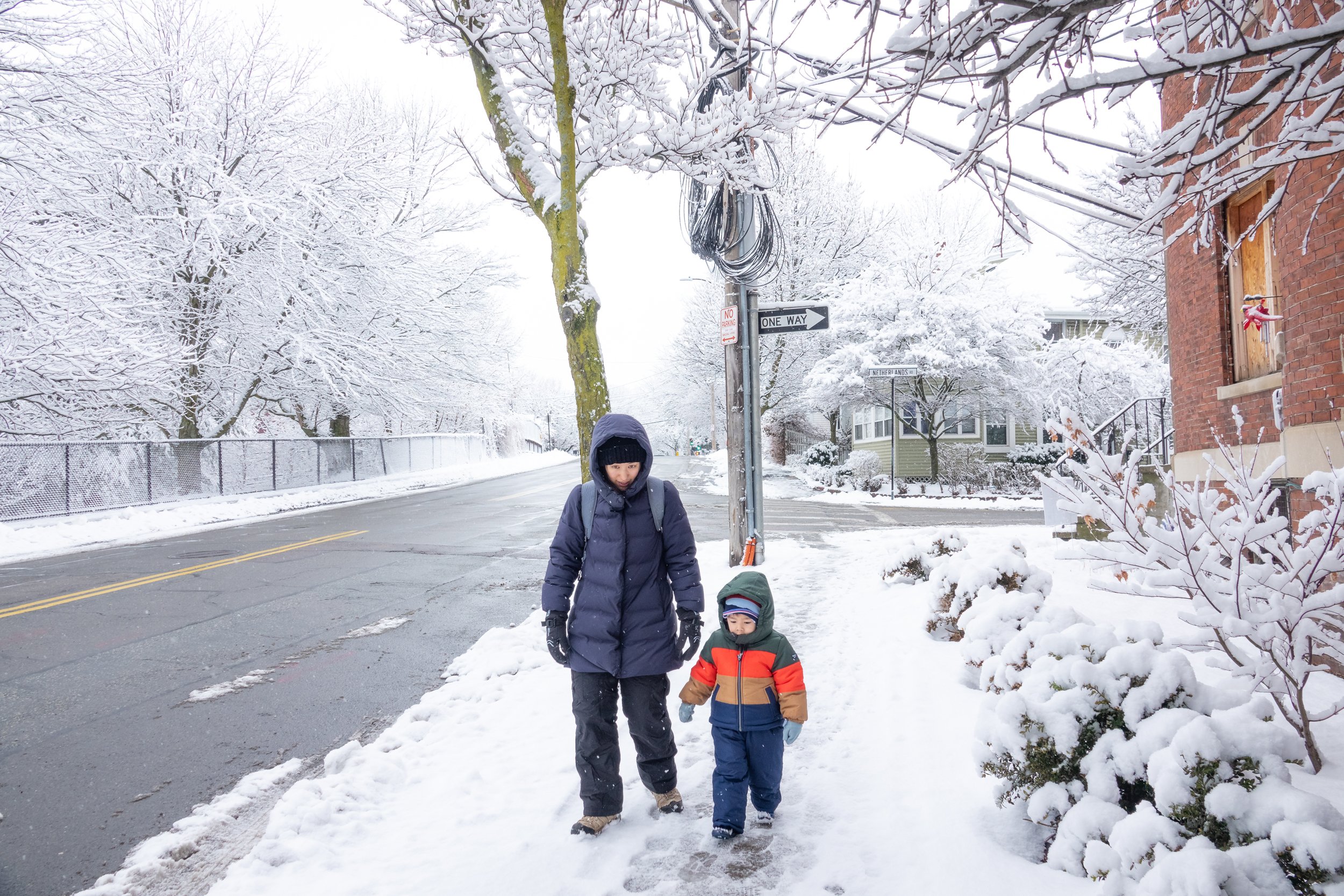
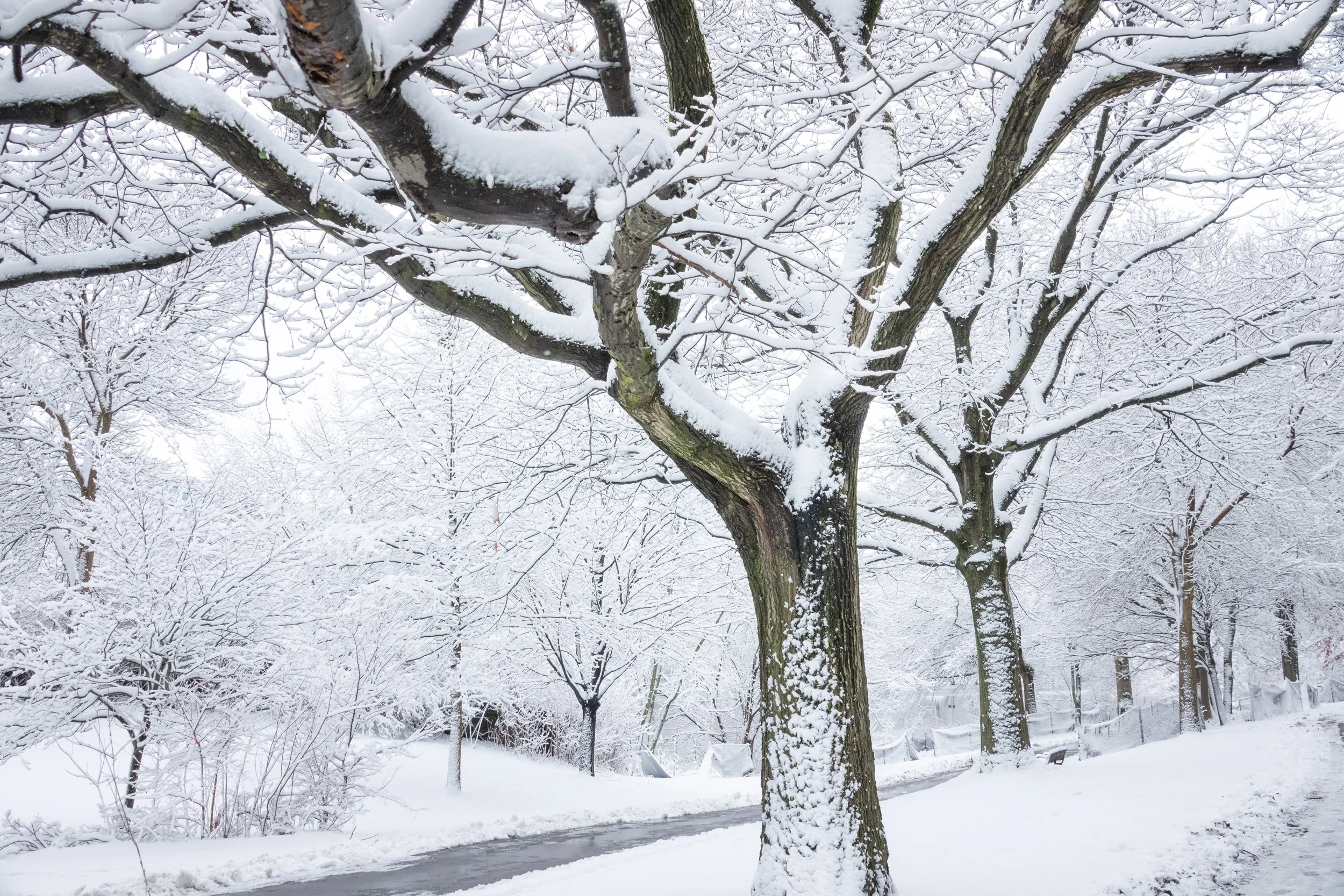
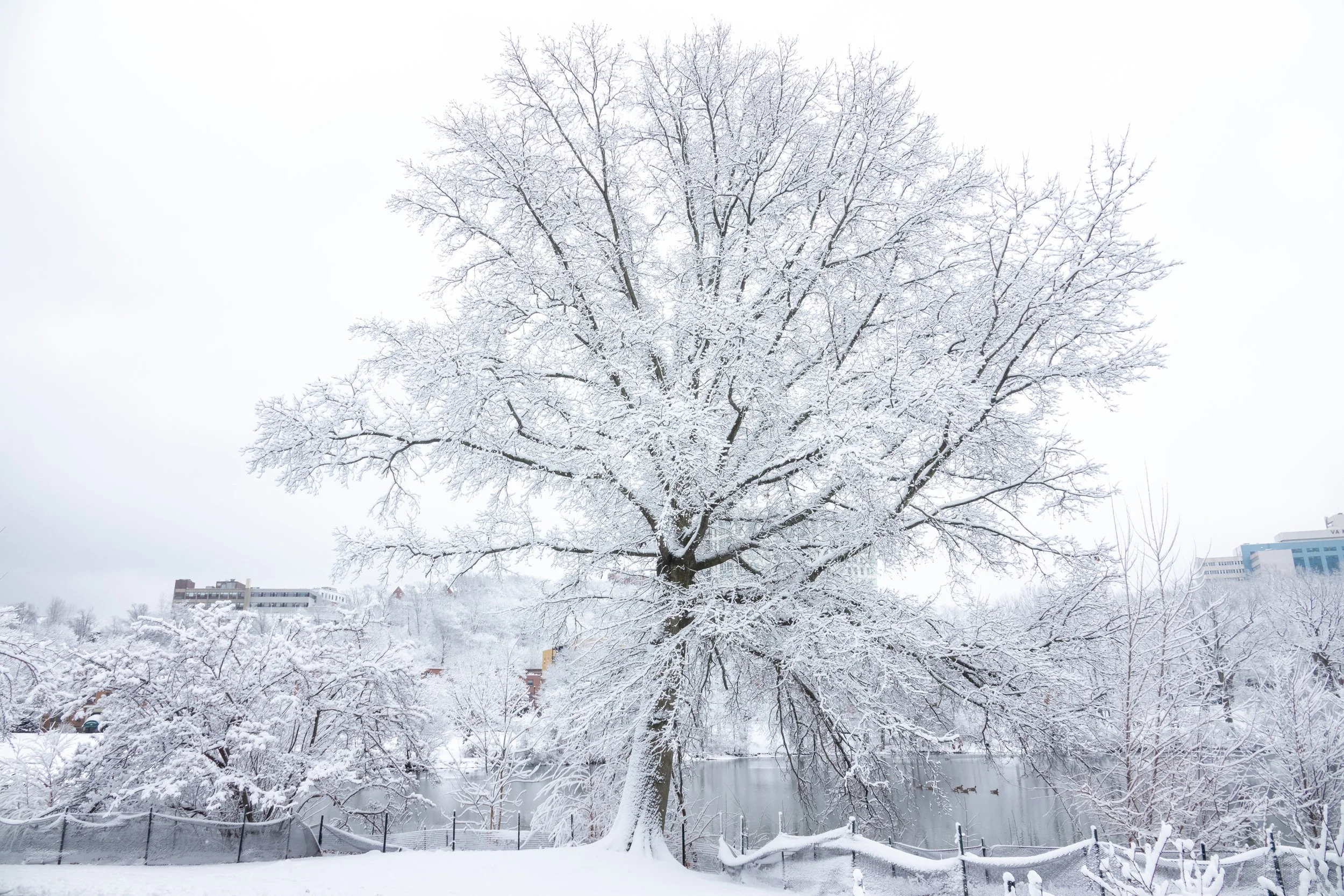
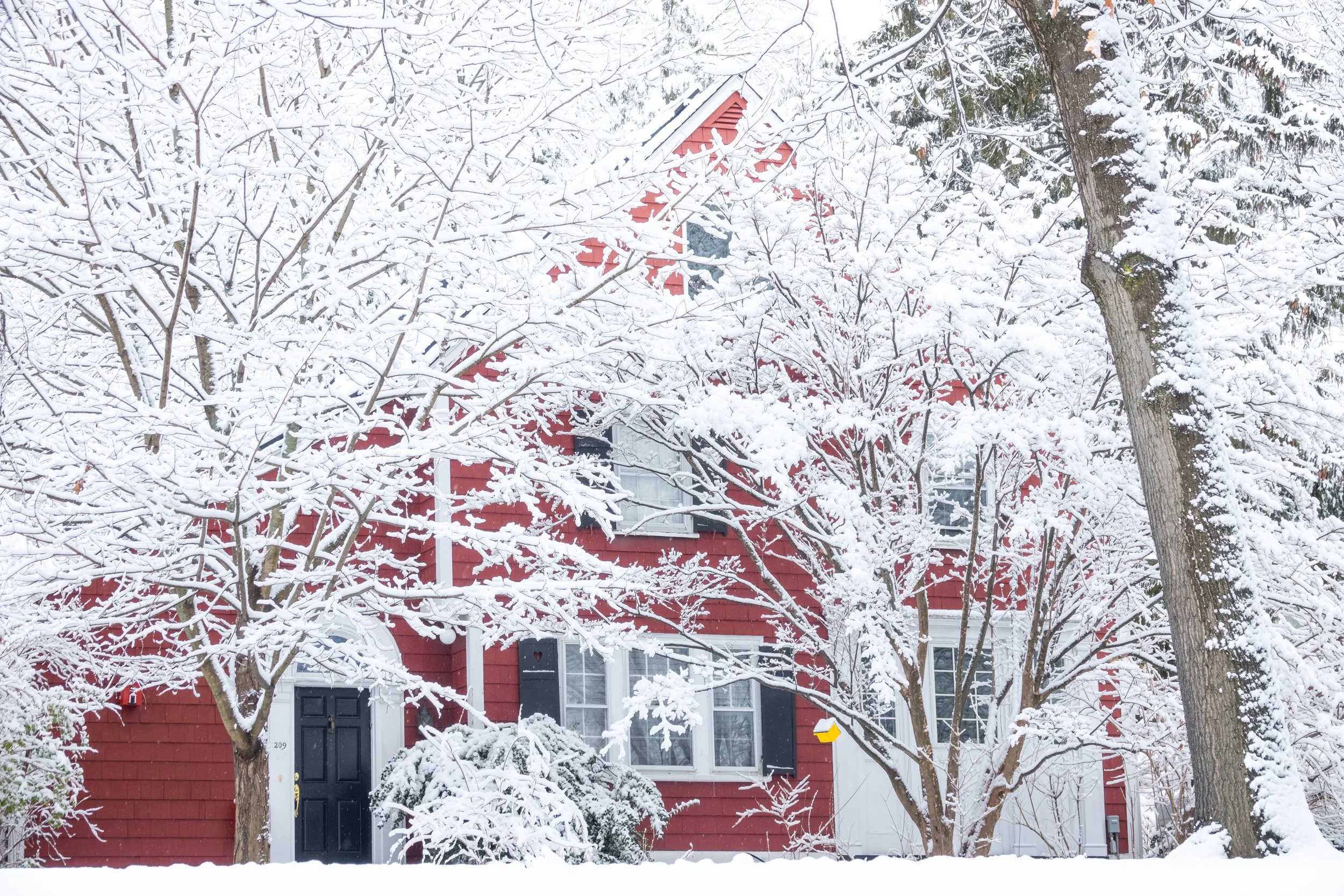
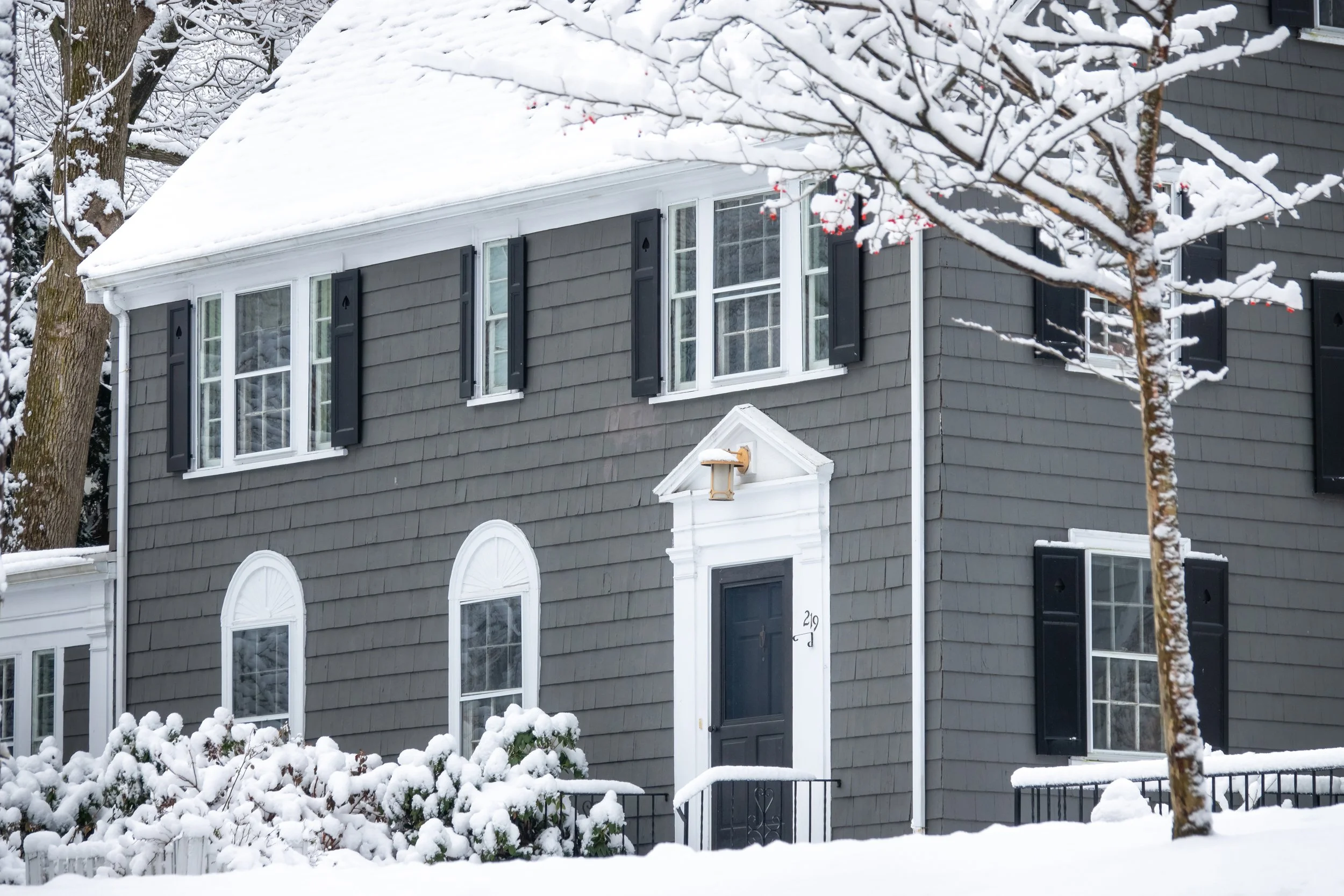
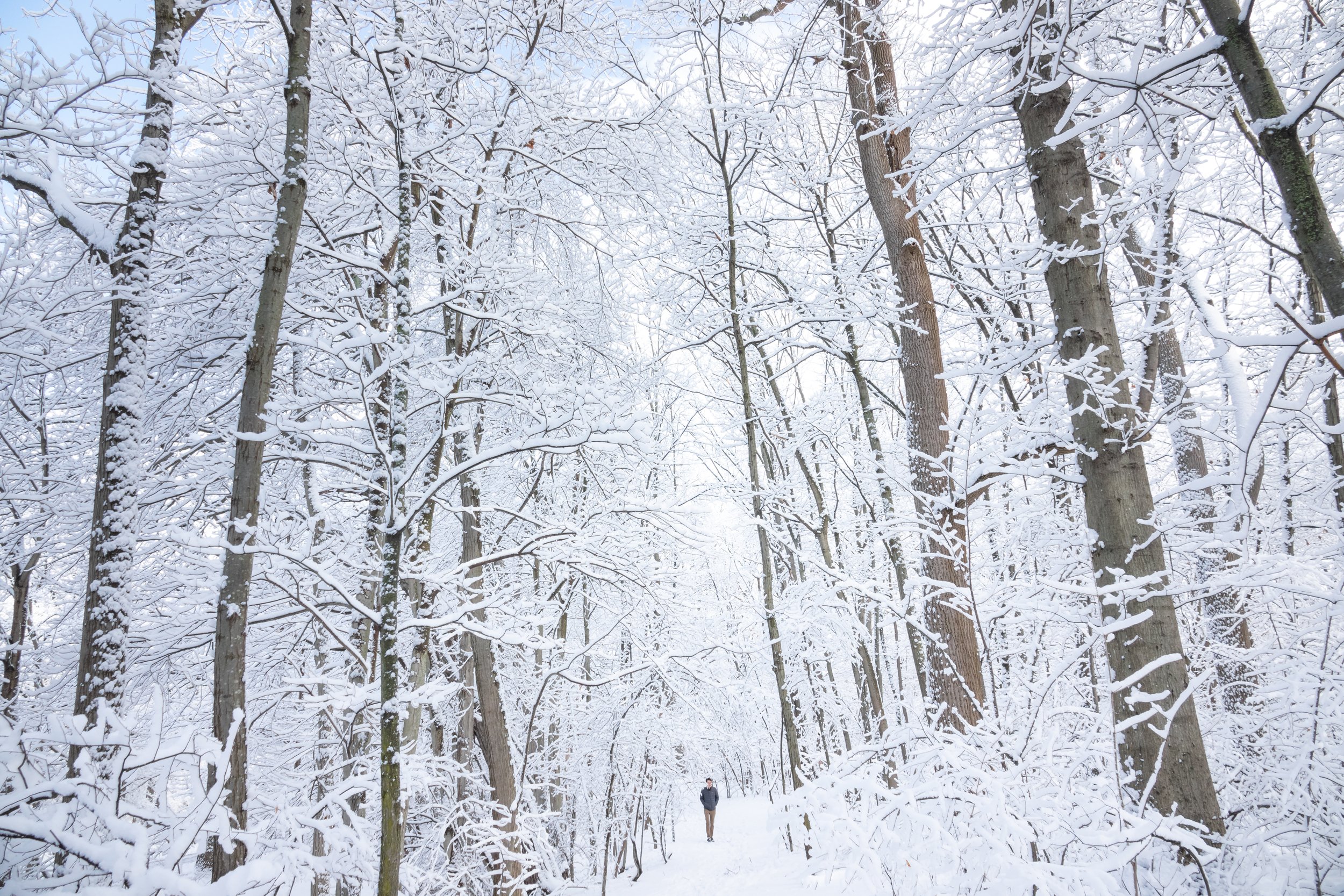
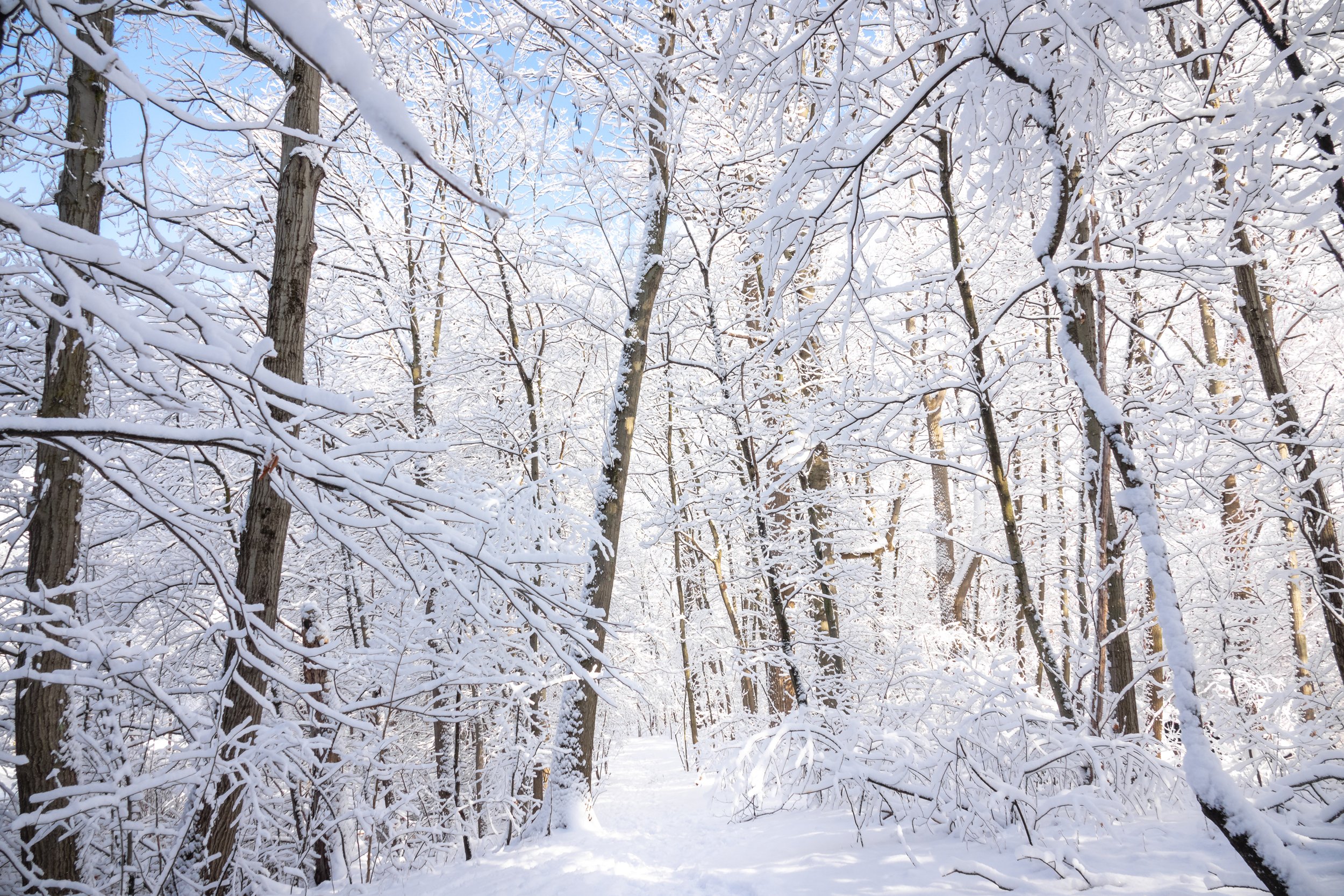
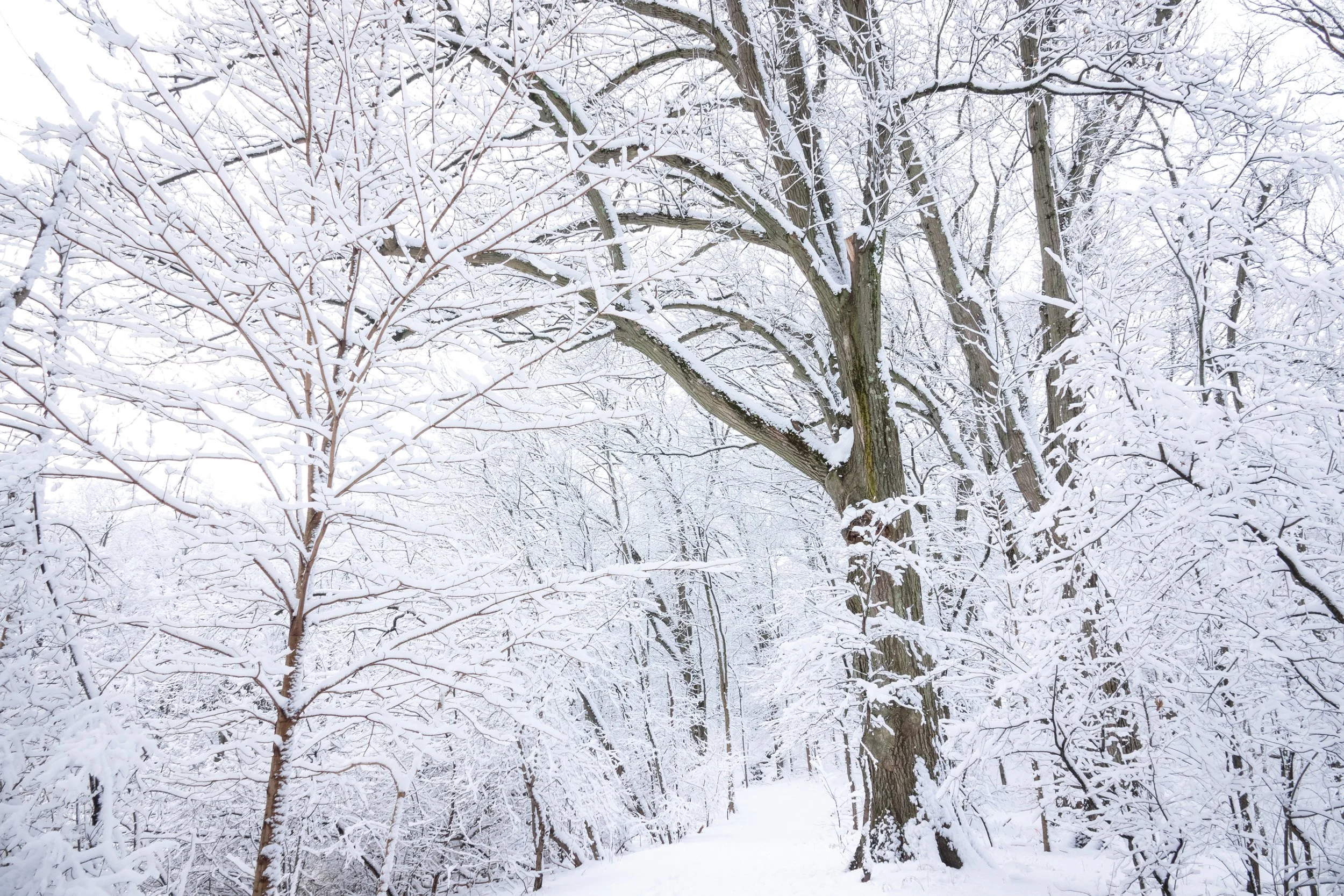
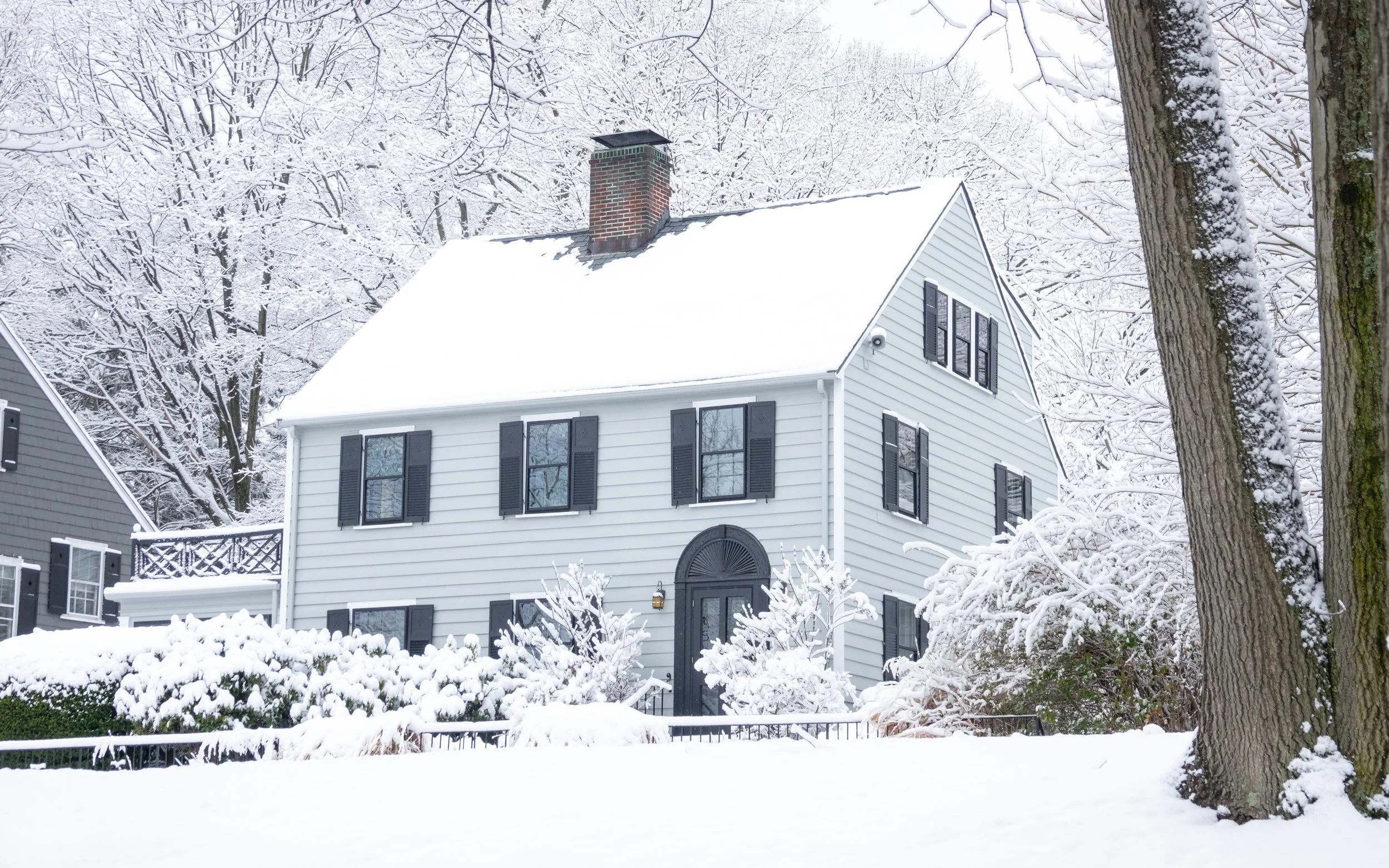
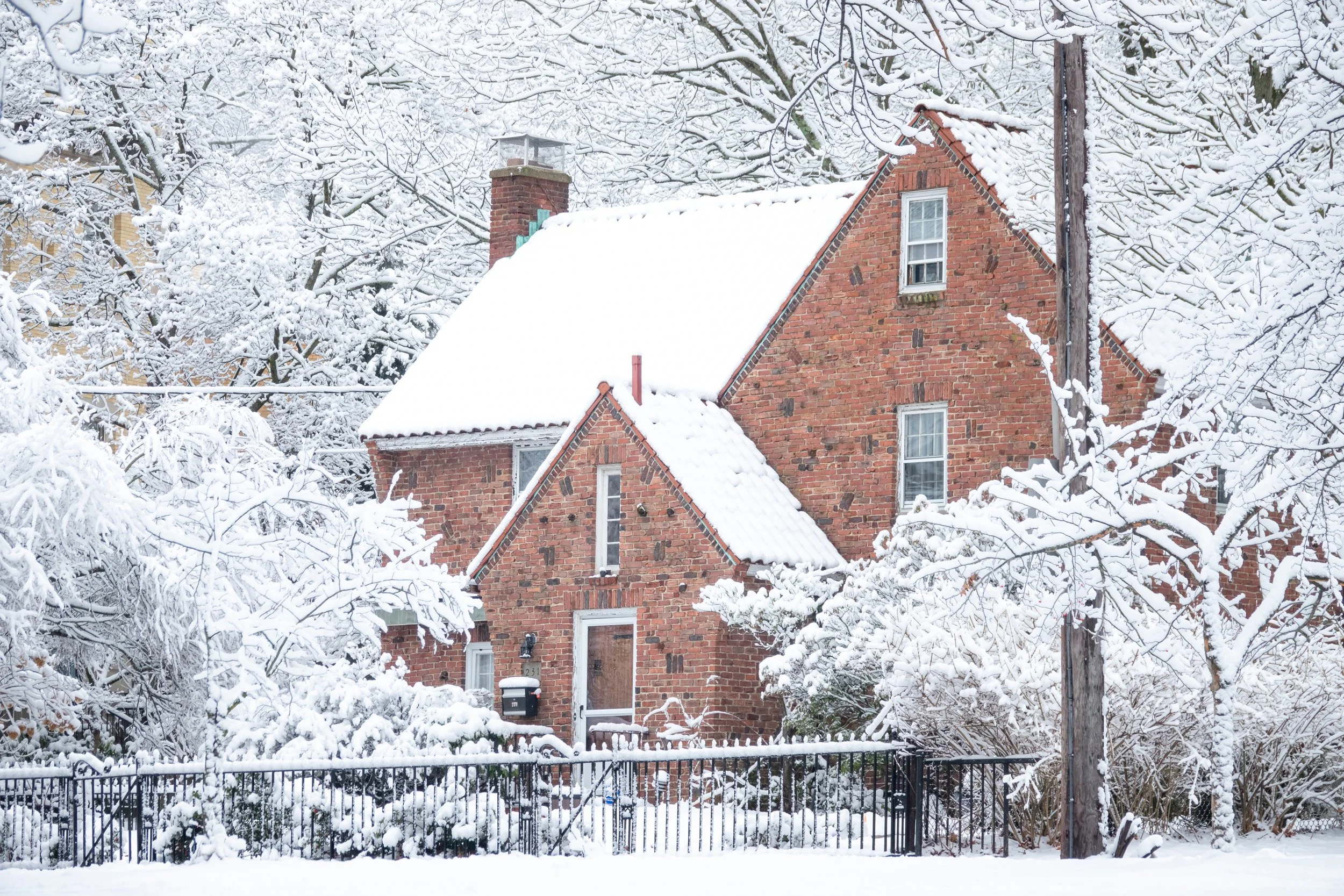
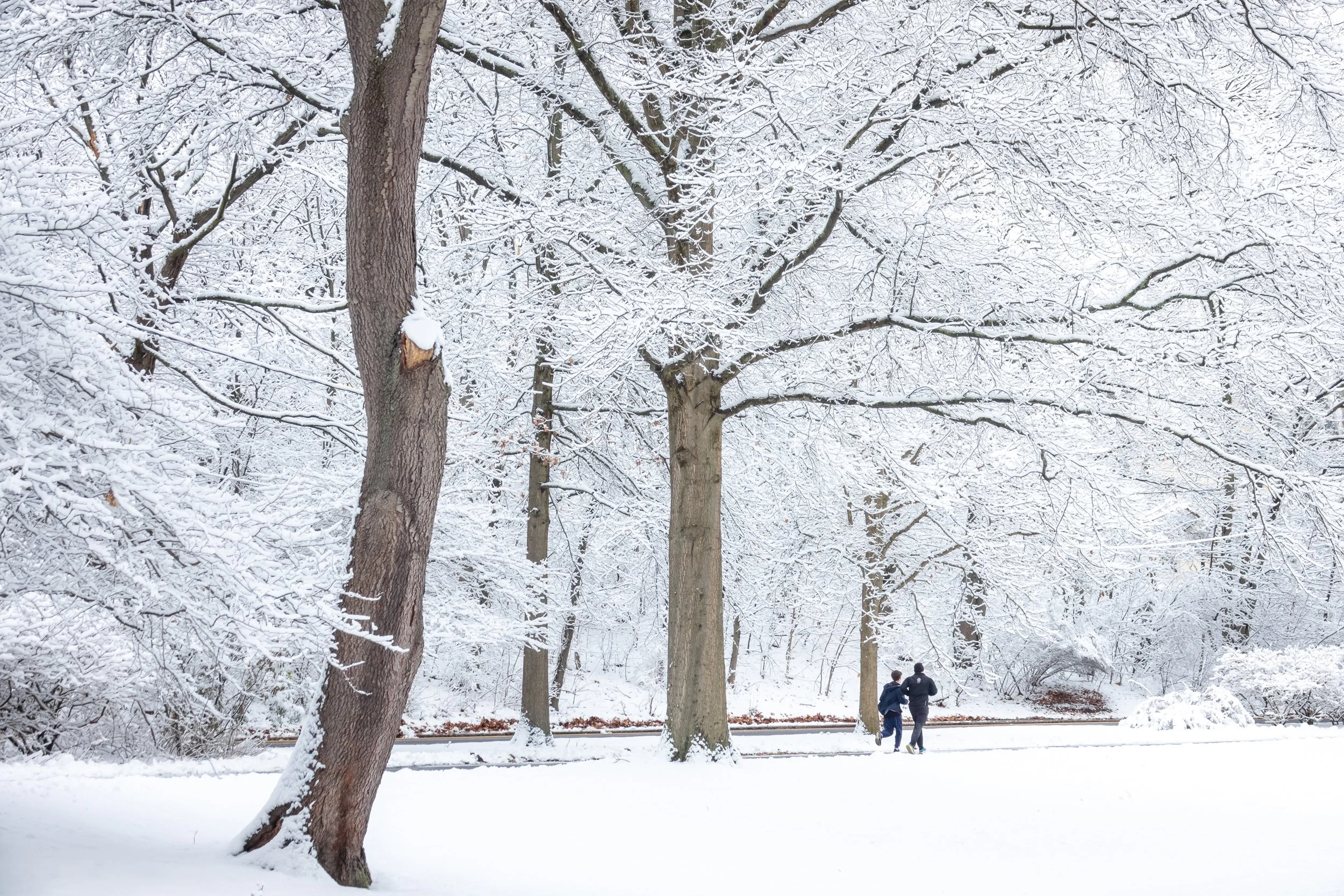
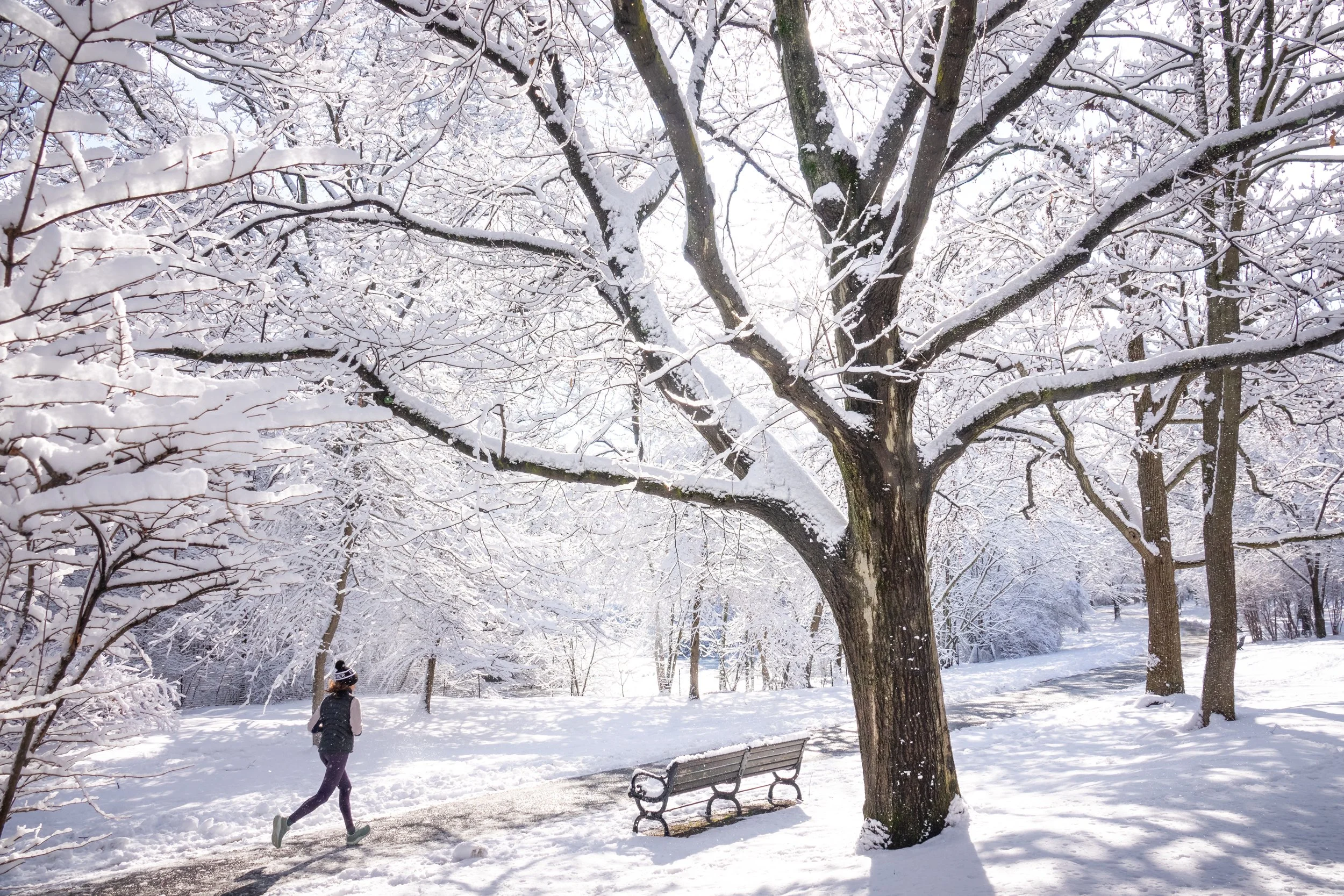
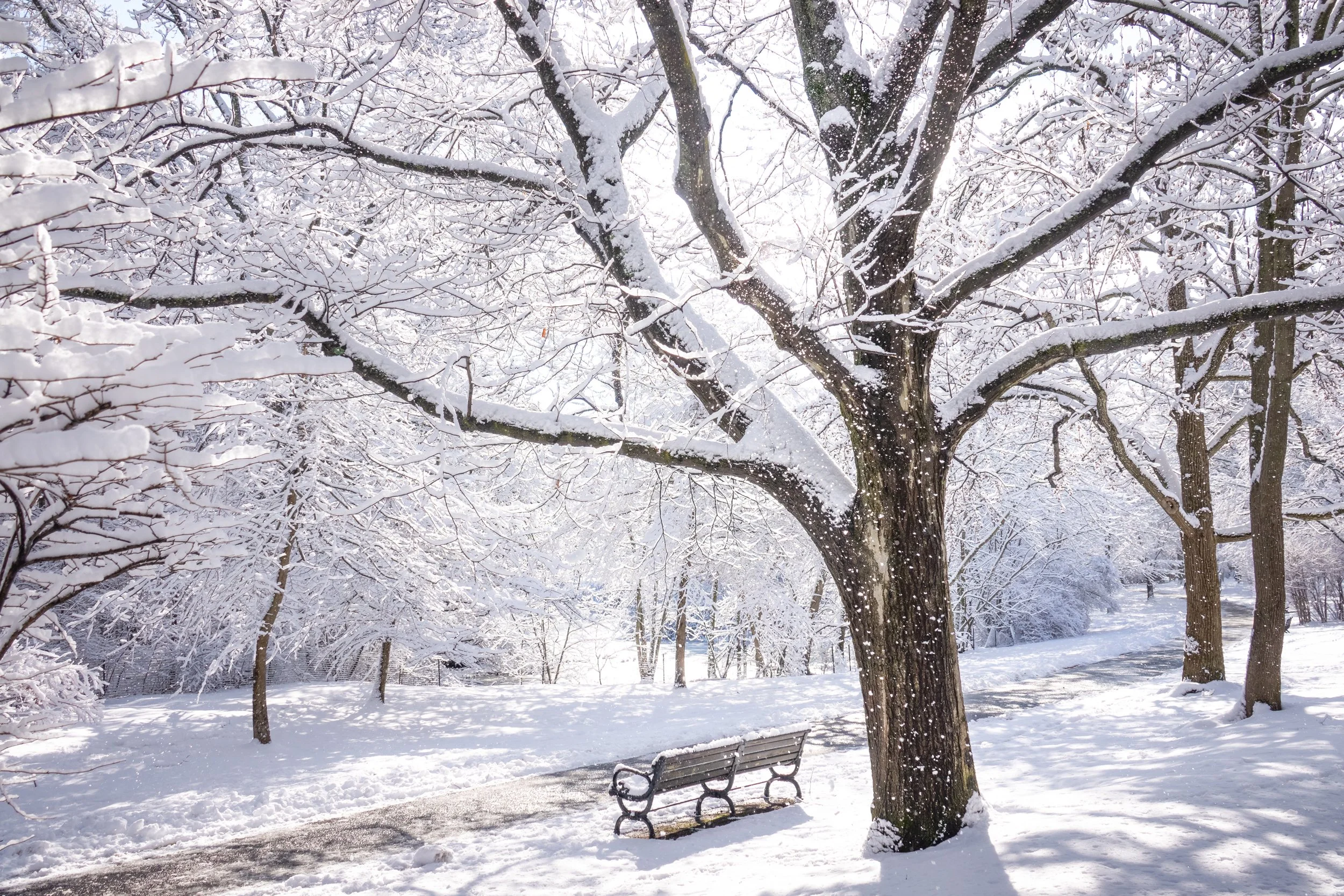
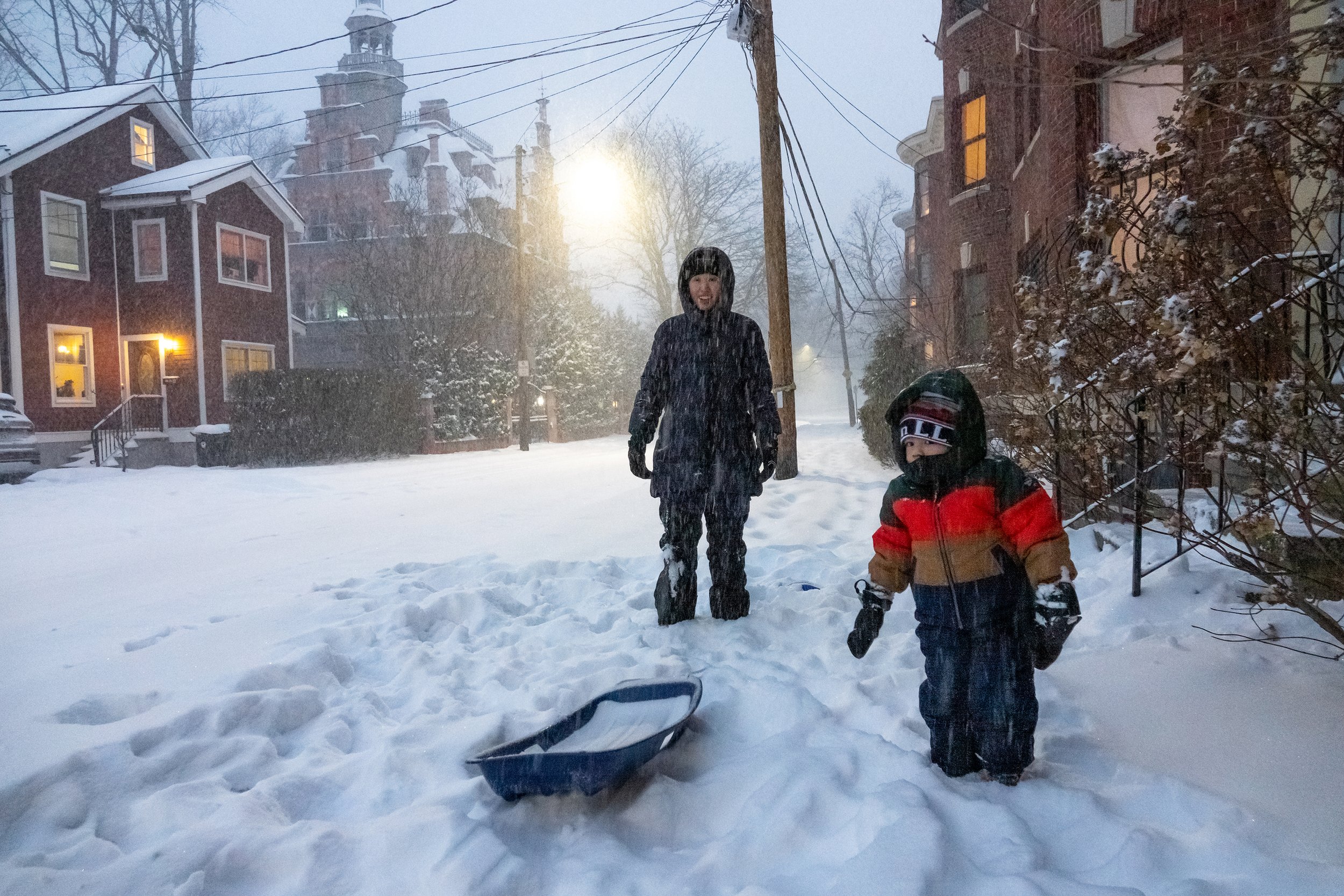
January finds us in the depths of the winter now - one of the coldest, darkest ones we have had in our time in New England. The mercury has largely dived below freezing for the past several weeks, and the early nights have had me alternating between feelings of cozy and stir-crazy. On the holiday weekend of Martin Luther King, Jr. Day, a snowstorm blows into town after Jordan’s Saturday morning dance lesson and bookstore sing-along/library/pizza run. We spend Sunday largely cooped up at home, enjoying the weather from the comfort of the windowsill. Jordan and I cuddle on the bed and play “sneak-a-peek” (I Spy) through the window, although he has largely taken to telling me what he wants me to sneak-a-peek at (which I must then, in turn, tell him to look for, which of course he will promptly spot). From his bedroom window, we spot the family of rock doves on our balcony; three blue recycling bins; two red cars; the distant lights of the BWH helipad. From my window: a Christmas tree in a blue house; a squirrel’s nest; a weathervane. I make Syracuse salt potatoes, and we have all manner of snacks after Jane makes a grocery run. On Monday morning, I draw the curtains to find a glowing white world of snow, freshly fallen overnight. Close as we live to the Longwood Medical Area, it’s a rarity for the stuff to remain unplowed and untrammeled for long. I get the photography bug for the first time in weeks, and head out on a long walk with camera and my winter gear, accompanied by Jane and Jordan for the first few blocks.
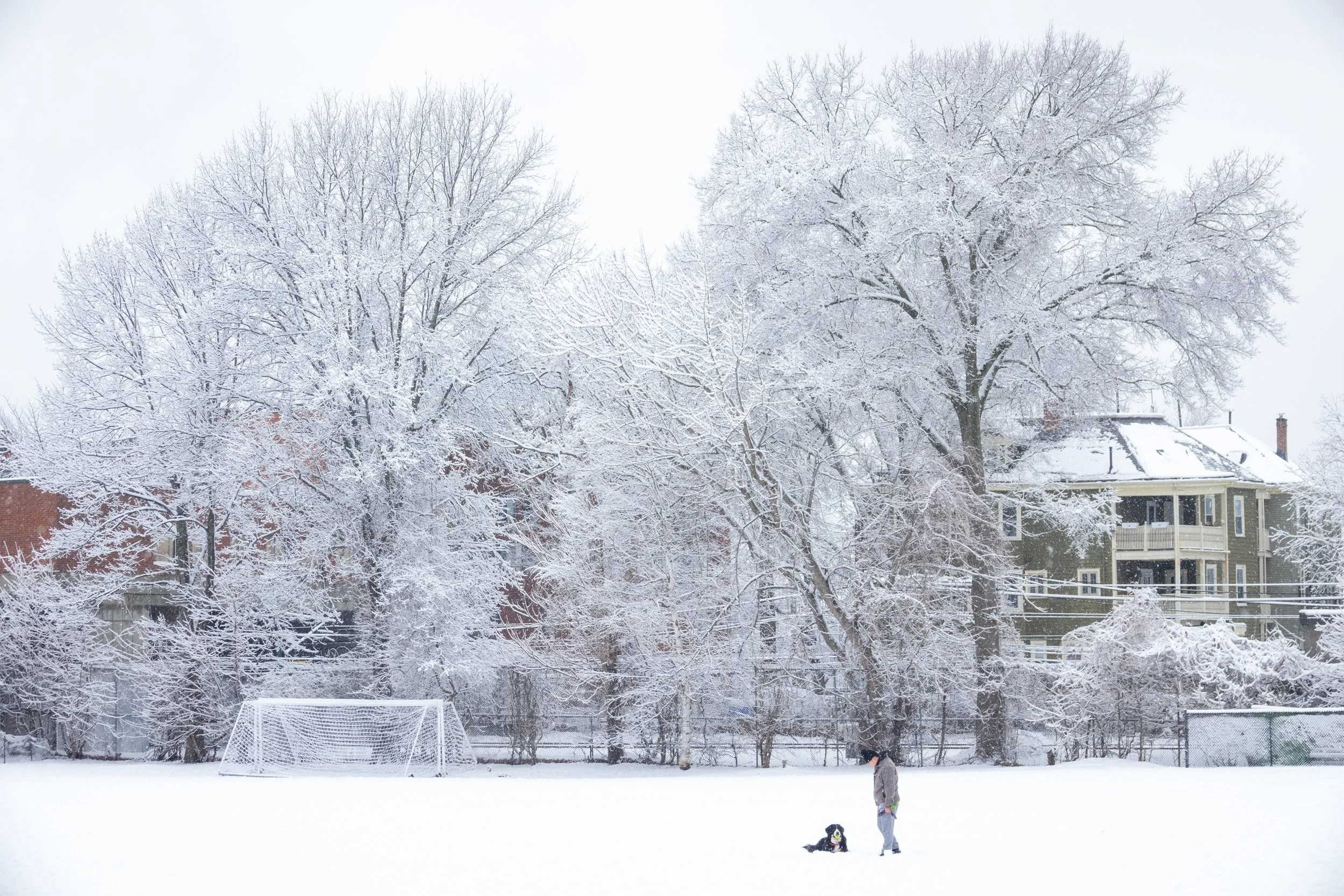
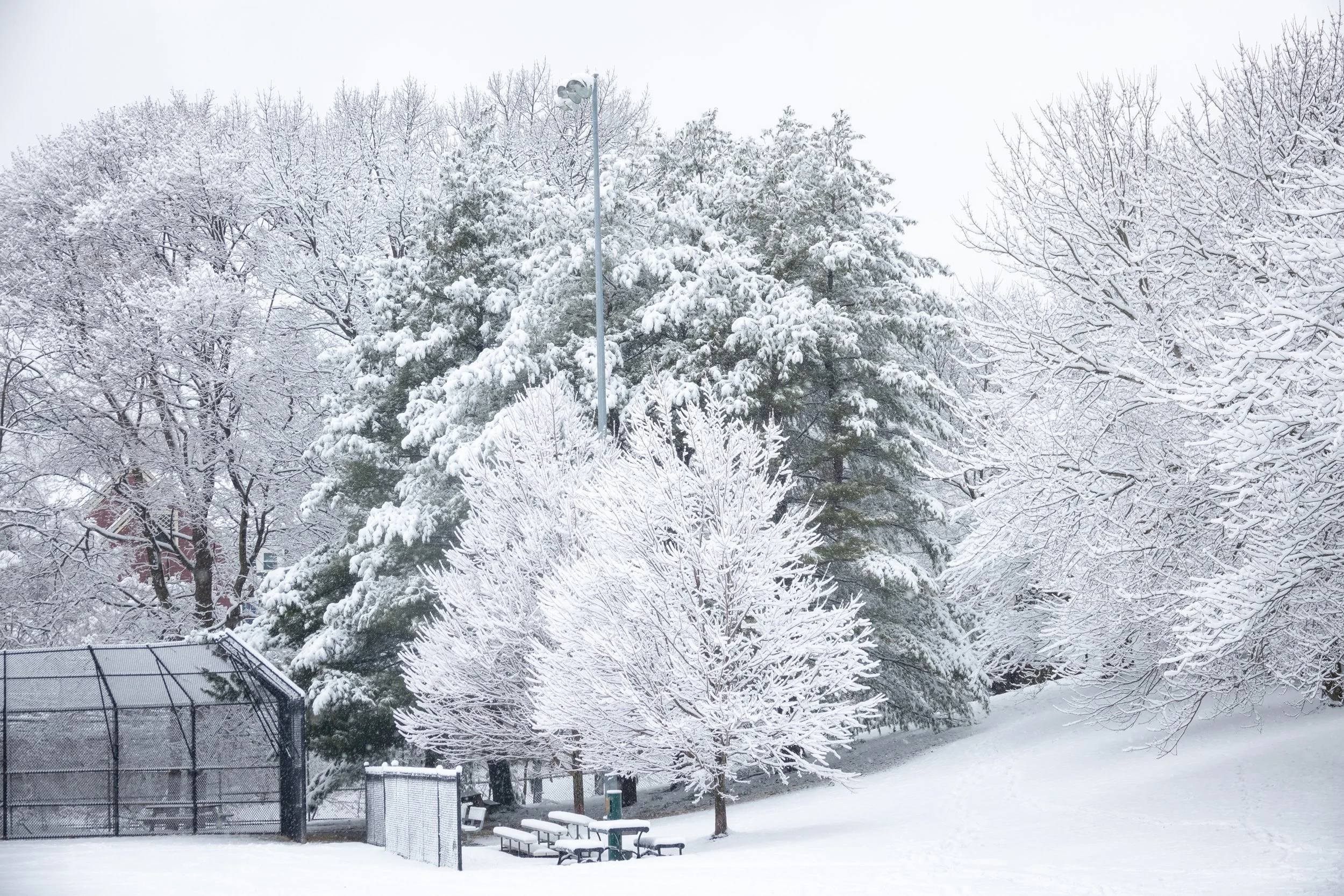
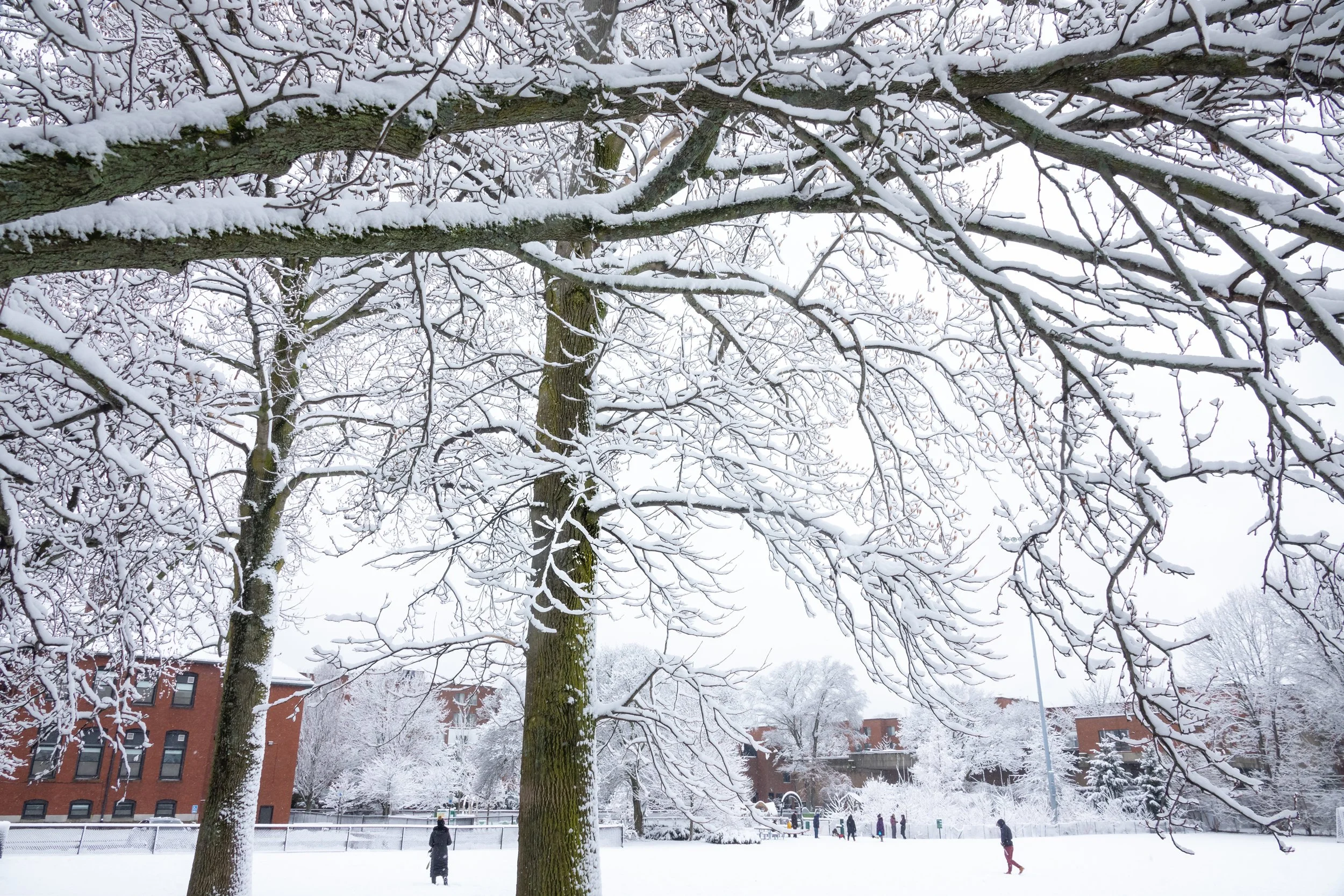
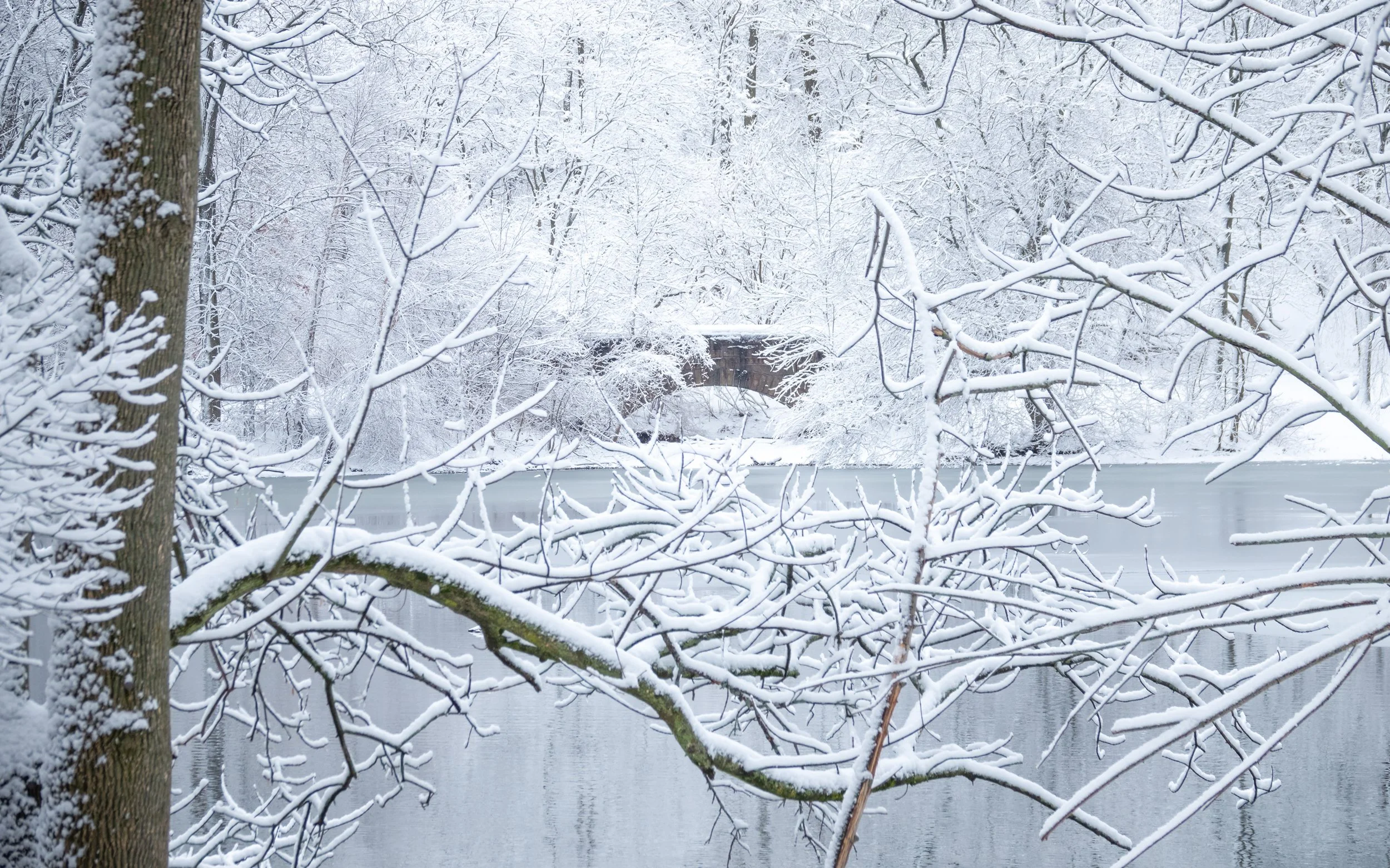
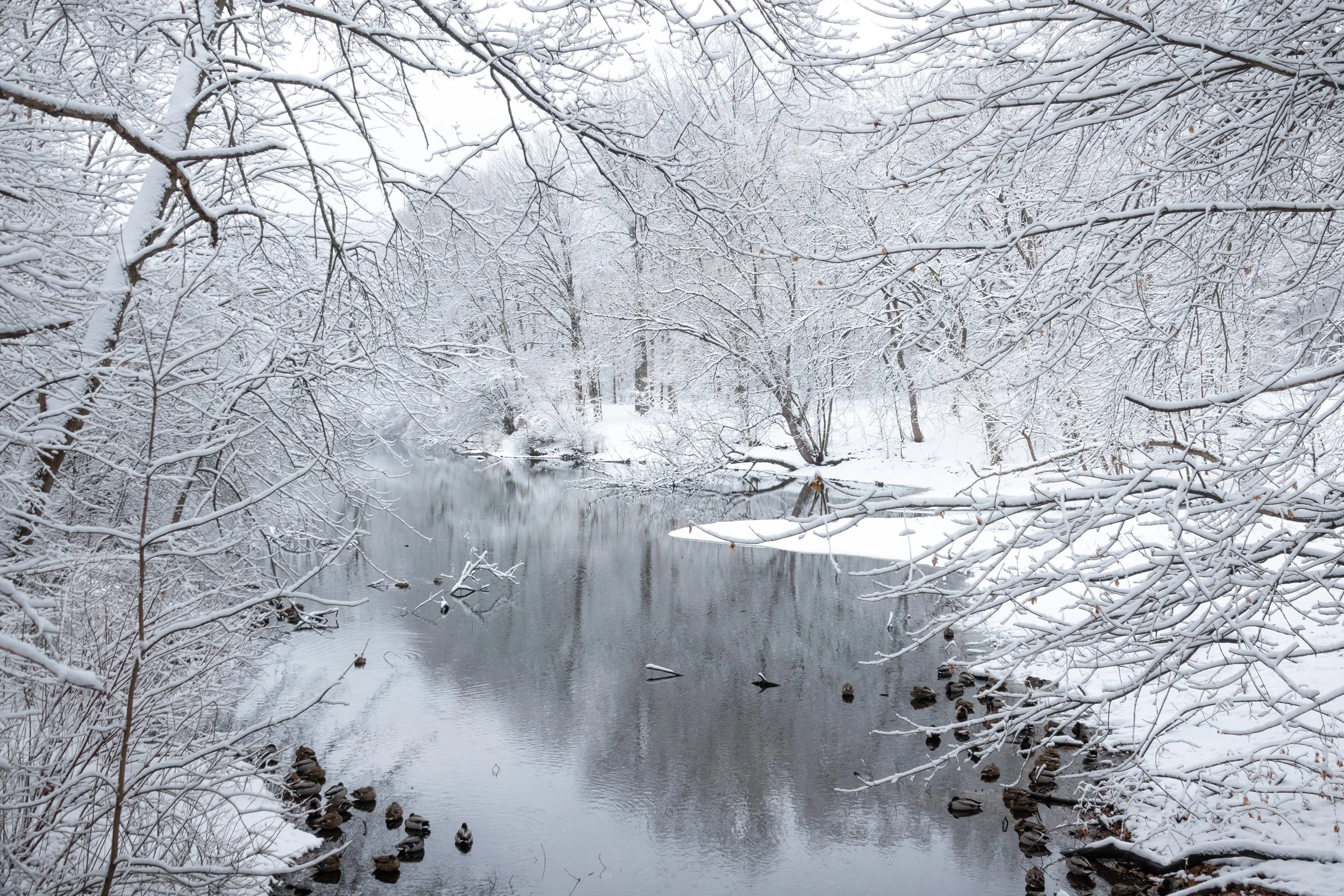
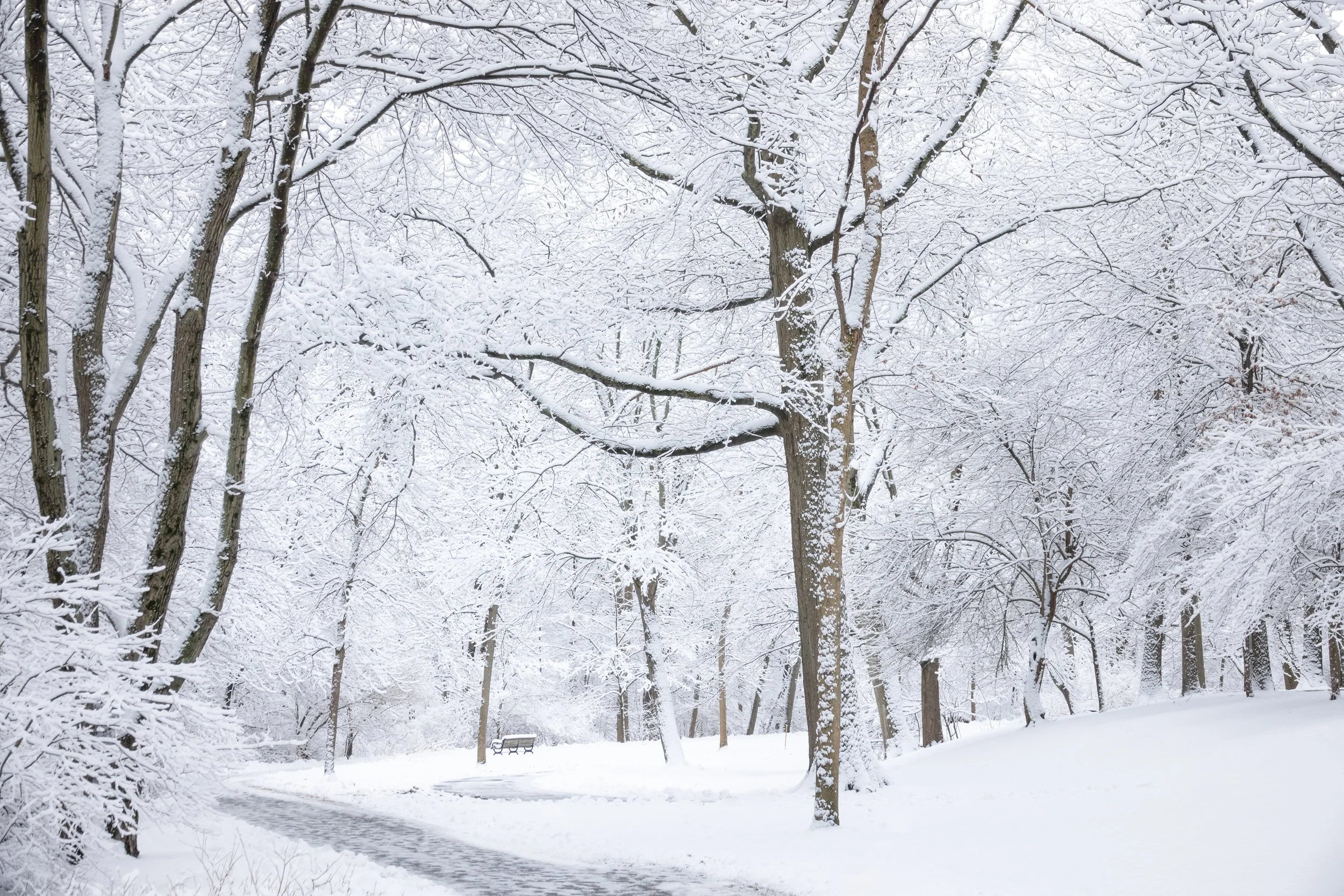
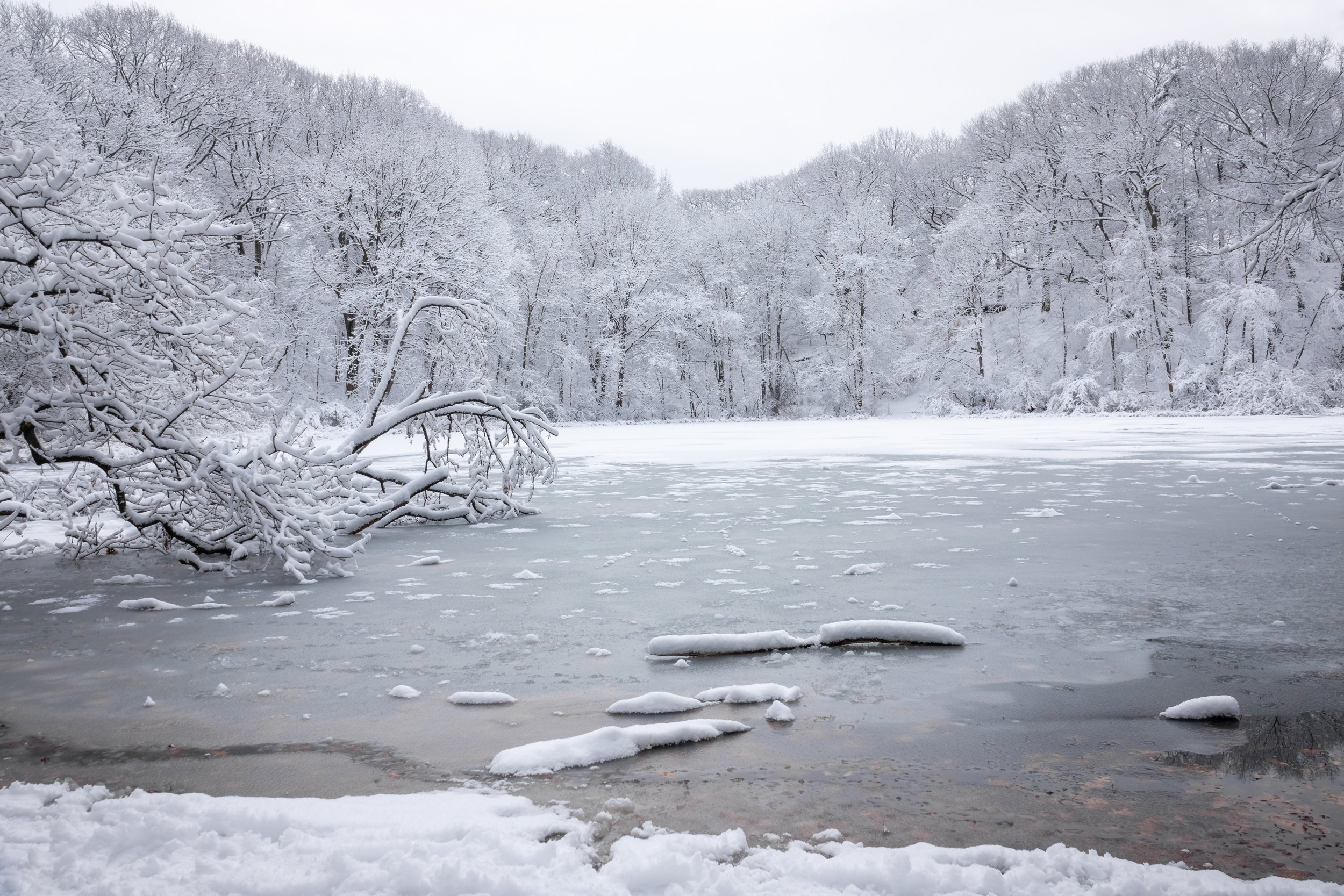
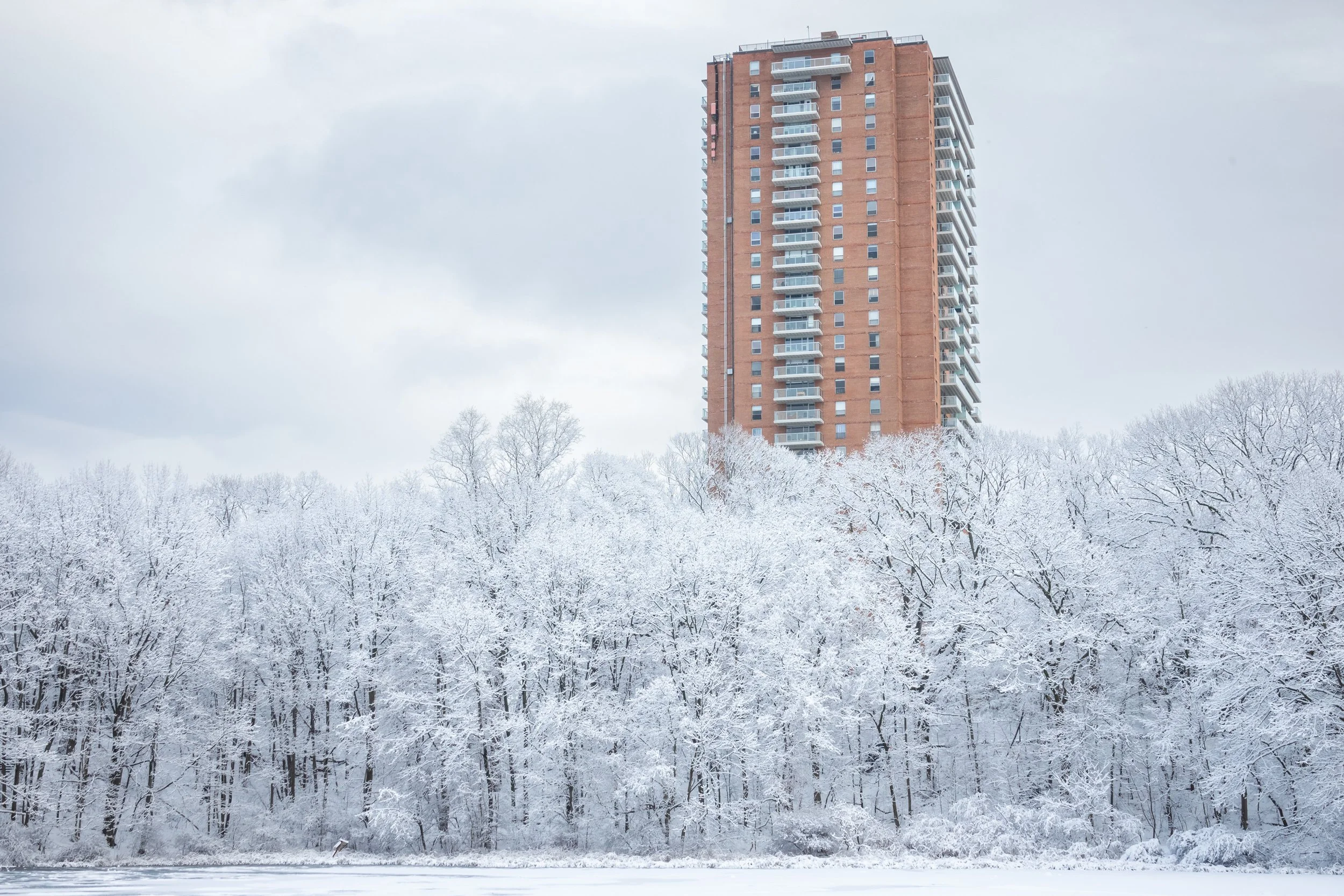
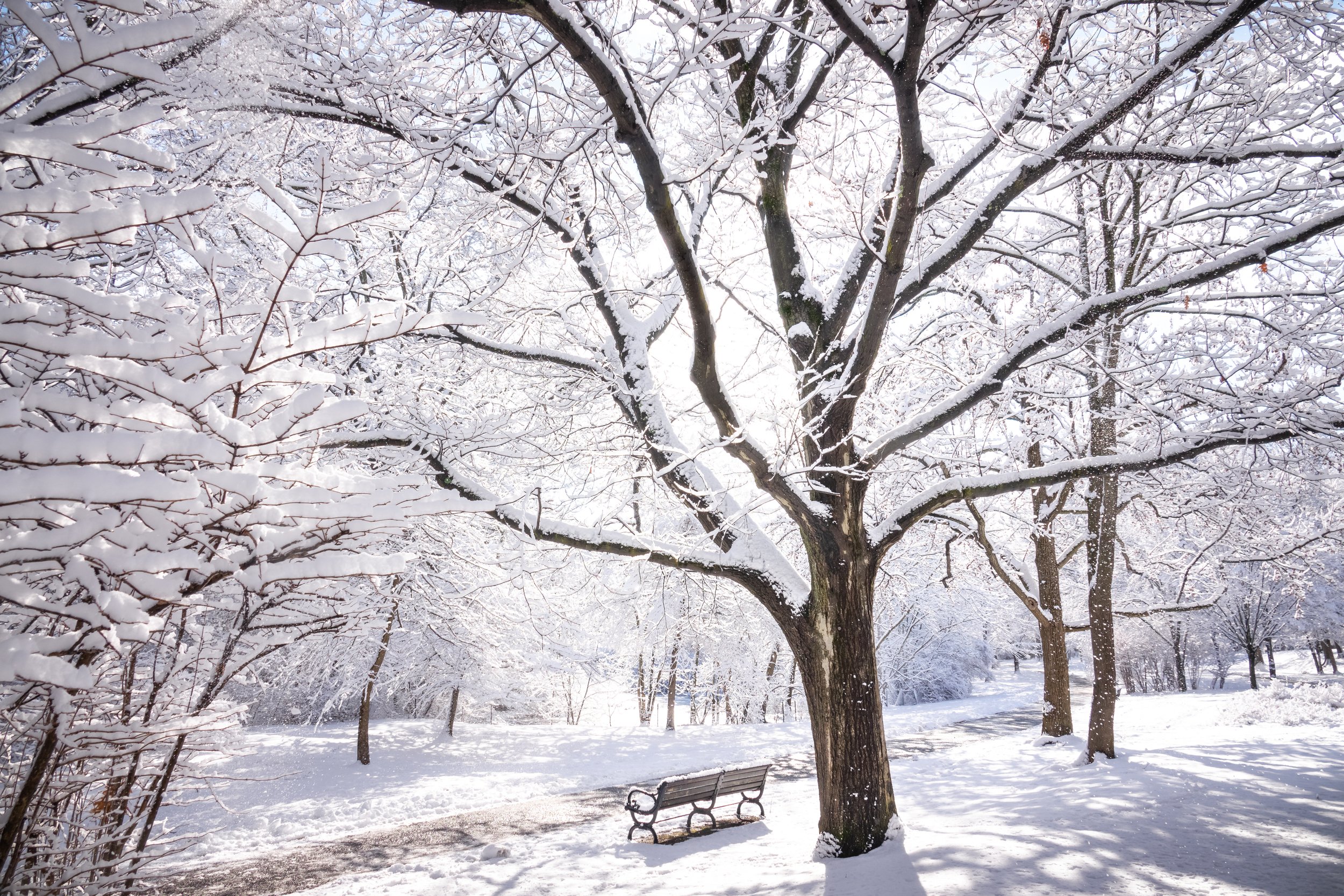
It’s been years since I engaged in proper winter photography - not since before Jordan was born, I believe. Even up here in coastal Massachusetts, snowfall is becoming rarer and rarer, and it’s still not usual for me to be free the day after a storm. When we moved from Baltimore up to Boston, I had a dream that I would really invest myself in New England, documenting all its seasons, and seeking out its soul by understanding its nature, its landscape, and its people. Some of that dream has panned out - mostly in spring and autumn forays - while much of it has fallen to the wayside amidst “real” life, parenthood, etc. Winter remains largely a time for hibernation and recuperation, rather than for creativity or inspiration. Still, what I’m experiencing is not just a seasonal lull or rut. I find myself in a strange position, much like the marcescent oak leaves that cling stubbornly to trees laden with snow this morning along the Emerald Necklace: withering as an adaptation; stuck in place but not truly attached; am I part of a cohesive whole? Am I doing something valuable even if I wouldn’t say I’m thriving? These type of questions pop into my head, naturally, when I’m out and about and alone, in the urban woods, looking outward and inward with my camera and my thoughts. I make my way through the snow, down to Olmsted Park and to the edge of Wards Pond - an old running route. I crouch down on the forest floor to get an angle, my breath condensing upon my eyelashes and my viewfinder. The sun comes out halfway through my walk, and blue skies and clearing storm light pierce through the white woodlands. I take some lovely backlit compositions on my way back north. I think I spot the swan family from last summer - the adolescents all grown up and bearing white plumage - swimming along the shore of Leverett Pond.
Six winters here, and this is the first time I’ve photographed this stretch of the Emerald Necklace in complete winter condition. It still feels odd to me that after so much time, I don’t feel nearly as attached to this place - the birthplace and home of my only child - as I felt to Baltimore. Jane reasons that Baltimore was different; we were in our twenties; it was a formative time in our lives; we were making a home and doing everything for the first time. Maybe so. I still feel like there’s something pheromonic about place, just as there is about emotional attraction and love. Some type of spontaneous chemical interaction between sense, emotion, and memory. When a place resonates with you, it’s not just visually captivating. It smells right. The air feels right. The sights and sounds and human community become part of a bigger fabric, and that fabric becomes a definition, a sense of grounding, a sense of home. Years later - I’m still looking for it. I’m in no hurry to leave this place, but there’s been - always has been - a perpetual feeling of moving on. If we ever leave Brookline behind, I wonder how sentimental I’ll be about it. For now, I hang on, doing what I can, seeing the world as I may, and carefully observing the passage of time.